'Data & integration' From fragmented data to a solid foundation for digitalisation
Watch our short webinar series and discover how the various nodes are interconnected and either reinforce or hinder one another.
Trends such as AI, IoT and predictive maintenance offer significant opportunities. Yet in practice, we see that organisations are held back despite the use of modern technology, and this is usually down to a data issue. Without a reliable and comprehensive view of data, digitalisation often remains limited to isolated initiatives with little real impact.
In many organisations, asset information is scattered across different systems and departments, and different definitions are used. As a result, there is no comprehensive overview, and without such an overview, it is impossible to manage performance and risks effectively, meaning that decisions are based on assumptions.
This issue affects the entire supply chain:


You lack a reliable and comprehensive overview of your assets. Information is scattered or inconsistent, making it difficult to assess risks and justify maintenance and investments.

You work with information that is not always accurate or is incomplete. Technicians miss details and work orders are incomplete, meaning you cannot complete your work in one go. This leads to a lower first-time fix rate.

Your landscape is complex and difficult to manage. Data is scattered across systems such as Excel or Access, making integrations vulnerable and requiring a great deal of time and effort to implement innovations.
In practice, we see this happening in many organisations. As Niels Vervest – Practice Lead for Asset Management – puts it:
“AI, IoT, sensor data and digital twins make it technically possible to monitor assets continuously and detect anomalies at an early stage. Maintenance is thus shifting from reactive to predictive: problems are resolved before they have an impact. In theory, this leads to less downtime, lower costs and more reliable operations.”
“In practice, however, a gap often emerges. You get more value out of your technology if you improve the quality of the underlying data, and that is precisely where things go wrong in many organisations. Asset information is incomplete or inconsistent, meaning that insights are unreliable and decisions are made based on assumptions. The result is that maintenance remains reactive and investments are postponed. This means you cannot benefit from advantages such as lower costs and reduced downtime.”


“Master Data forms the foundation of any form of digitalisation (read more soon about how to set this up on our Master Data Management page). It determines whether you are even capable of properly monitoring assets, analysing performance and managing costs, risks and lifespan in a targeted manner. Only once that foundation is in place can technology truly add value. Organisations that have their data foundation in order ultimately harness the full potential of AI and digitalisation, thereby making a real difference.”
Would you like to find out more about this junction? Then sign up for the annual Ideo event on the 6th of october. Click the button below for more information.”

Beneath these nodes lies the IT landscape that connects everything. For example, following the S/4HANA transition, many organisations struggle with challenges such as making the standard user-friendly, for instance through (Fiori) app development and extensions. Furthermore, flexibility often proves difficult to achieve: a cluttered core makes systems less manageable and limits upgradeability. Systems also frequently fail to integrate sufficiently with one another, causing processes to slow down and making it increasingly difficult to implement changes.
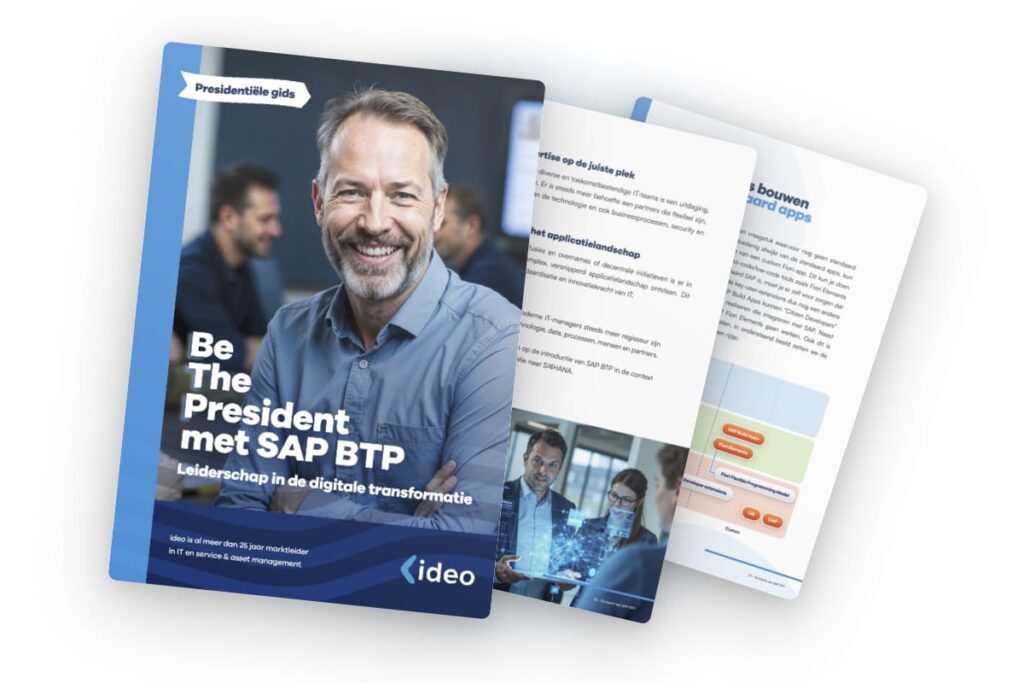
This white paper demonstrates how organisations can make the transition from a fragmented system landscape to a robust IT foundation for the supply chain. It focuses on how to achieve coherence between processes, data and technology within Service & Asset Management, with platforms such as SAP BTP playing a key role.

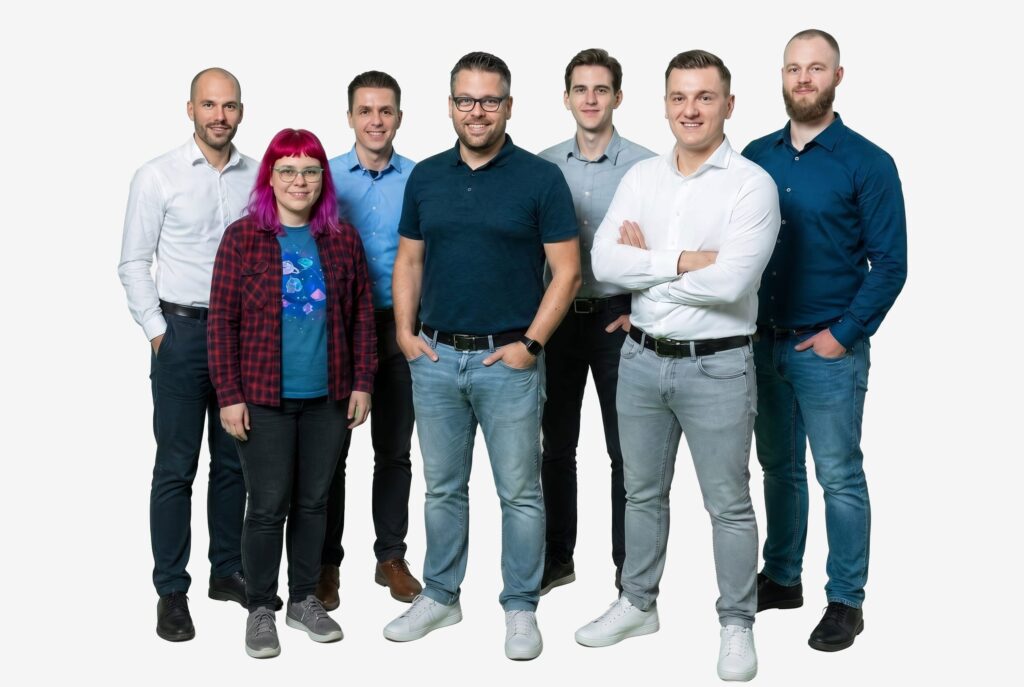
Many organisations lack a reliable and comprehensive overview of their assets. Our team identifies the root causes of this and brings structure to the process. With our in-depth knowledge of SAP products and understanding of business processes, we build a solid data foundation so that you can once again make decisions based on reliable information.
Explore our products and areas of expertise:

Curious to find out what opportunities you can still capitalise on when it comes to data? Find out during the ‘Insight & Control’ webinar: From fragmented data to a solid foundation with reliable master data.